
If you have a website or online business, you may have heard the term What is SEO. SEO is one of the most important parts of digital marketing because it helps websites appear higher in search engine results.
When people search for something on Google, they usually click on one of the first few results. This is why businesses want their websites to rank higher. Ranking higher on search engines can drive more visitors, create new leads, and support business growth.
But what is SEO, and how does it work for a website?
Once you understand what is SEO, it becomes easier to plan your content, optimize your website, and improve your search visibility. In this beginner-friendly guide, we will explain what is SEO is, why it is important, how SEO works, and the different types of SEO**.
What Is SEO?
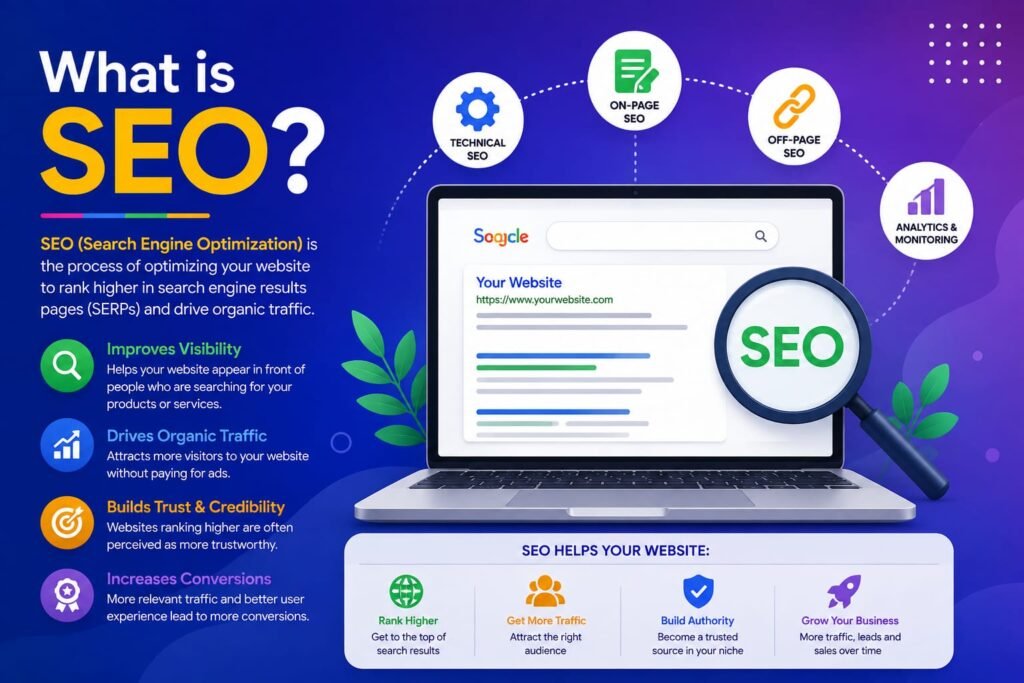
What Is SEO? SEO stands for Search Engine Optimization..** It is the process of improving a website so that it can appear higher in search engine results for relevant searches.
Search engines such as Google use different factors to understand and rank websites. SEO helps search engines understand your website and helps users find useful information.
For example, imagine you have a dental clinic website. Someone searches for **”best dental clinic near me.”** If your website is properly optimized for relevant keywords and provides useful information, it may have a better chance of appearing in search results.Learning What Is SEO can help beginners understand how websites gain organic visibility.
SEO mainly focuses on getting **organic traffic**, which means traffic that comes from unpaid search results.
Why Is SEO Important?
SEO is important because most people use search engines to find information, products, services, and businesses.
A strong SEO strategy can provide several benefits:
* Increase website visibility
* Bring more organic traffic
* Improve brand awareness
* Generate potential leads
* Increase online credibility
* Support long-term business growth
* Help reach the target audience
Unlike paid advertising, organic search traffic does not require you to pay for every click. However, What is SEO requires time, consistency, quality content, and continuous improvement.
How Do Search Engines Work
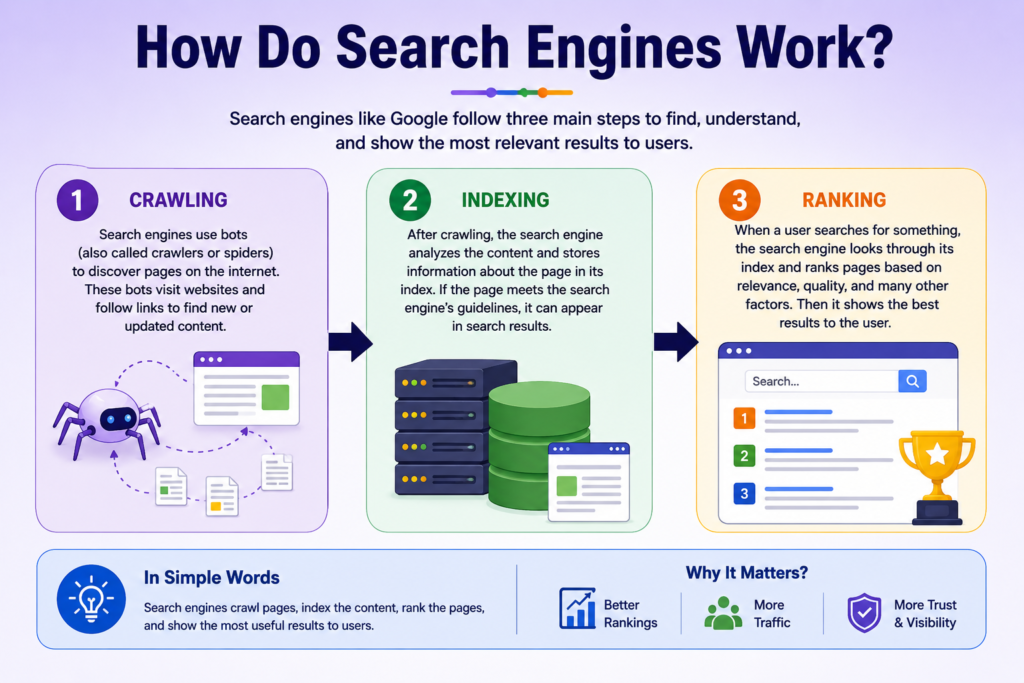
To understand SEO, it is helpful to know how search engines work.
Search engines generally follow three important processes:Understanding what is SEO also means understanding how search engines discover, evaluate, and display web pages.
1. Crawling
Search engines use automated programs called crawlers or bots to discover web pages. These bots visit websites and follow links to find new or updated content.
2. Indexing
After discovering a page, the search engine analyzes and stores information about that page in its index.
If a page meets the search engine’s requirements, it can potentially appear in search results.
3. Ranking
When someone searches for something, the search engine analyzes its index and determines which pages are most relevant and useful.
The search engine then displays results based on many ranking factors.
This is why SEO focuses on making websites easy for both search engines and users to understand.
What is SEO Types
SEO can be divided into several important areas. Understanding these areas can help beginners create a better SEO strategy.
1. On-Page SEO
On-page SEO focuses on optimizing elements that are present on your website.
Some important on-page SEO elements include:
* Page titles
* Meta descriptions
* Headings
* Keywords
* Website content
* Images
* Internal links
* URL structure
For example, if you are writing a blog about digital marketing, using a relevant keyword naturally in the title, headings, and content can help search engines understand the topic.
However, keywords should not be overused. Create content that feels natural, engaging, and genuinely useful to your audience.
2. Off-Page SEO
Off-page SEO refers to activities performed outside your website to improve its authority and visibility.
One important part of off-page SEO is **link building**. When other trustworthy websites link to your website, it can signal that your content is useful or valuable.
Off-page SEO can include:
* Backlinks
* Guest posting
* Brand mentions
* Social media promotion
* Online business listings
* Digital PR
The quality and relevance of backlinks are more important than simply getting a large number of links.
3. Technical SEO
Technical SEO focuses on improving the technical aspects of a website.
Important technical SEO factors include:
* Website loading speed
* Mobile-friendliness
* Website security
* Site structure
* XML sitemap
* Crawlability
* Broken links
* Proper redirects
A technically optimized website makes it easier for search engines to crawl and understand your pages.
It also provides a better experience for visitors.
4. Local SEO
Local SEO is especially useful for businesses that serve customers in a specific geographic area.
For example, restaurants, dental clinics, salons, gyms, and local shops can use local SEO to attract nearby customers.
Local SEO strategies include:
* Optimizing your Google Business Profile
* Using location-based keywords
* Adding accurate business information
* Collecting genuine customer reviews
* Creating location-specific content
For example, a dental clinic in Kochi might target keywords such as **”dentist in Kochi”** or **”dental clinic in Kochi.”**
What Are Keywords in SEO?
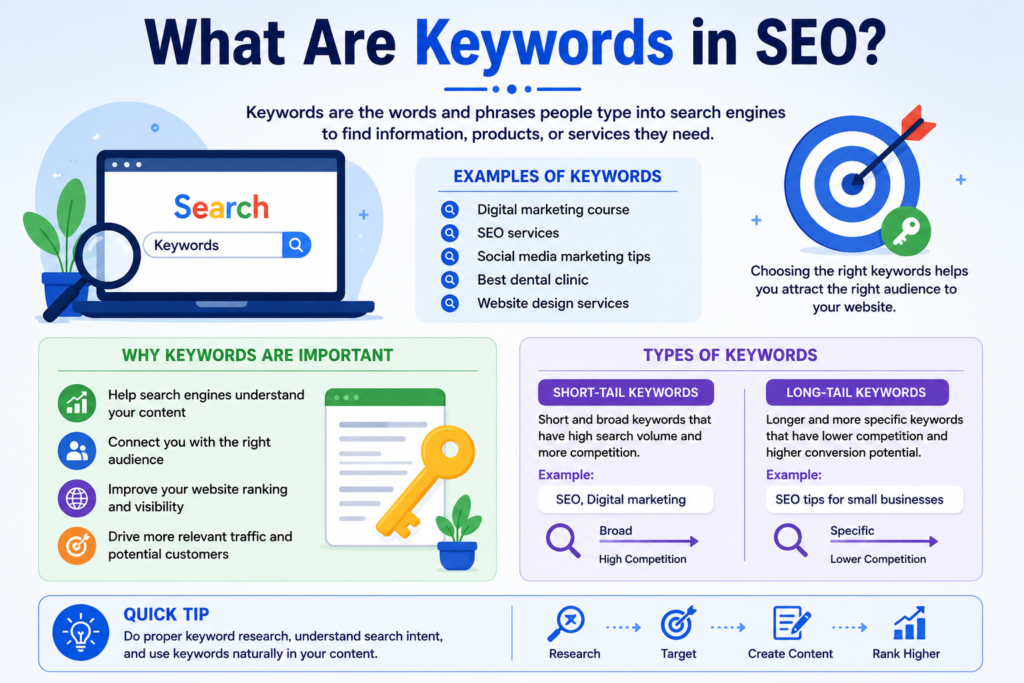
Understanding what is SEO can also help you choose relevant keywords more effectively..Keywords are the terms and phrases users enter into search engines to discover information, products, or services they need.”
For example:
* Digital marketing course
* SEO services
* Social media marketing tips
* Best dental clinic
* Website design services
Keyword research helps you discover the terms and phrases your target audience uses when searching online.Once you understand What Is SEO, you can make better decisions about website content and optimization.
Before creating content, you should identify relevant keywords and understand the search intent behind them.
Types of Keywords
Keywords can be broadly categorized into:
**Short-tail keywords:**
These are usually short phrases with broad meanings, such as “SEO” or “digital marketing.”
**Long-tail keywords:**
These are more specific search phrases, such as “SEO tips for small businesses.”
Long-tail keywords can be useful because they often target a more specific search intent.
What Is Search Intent?
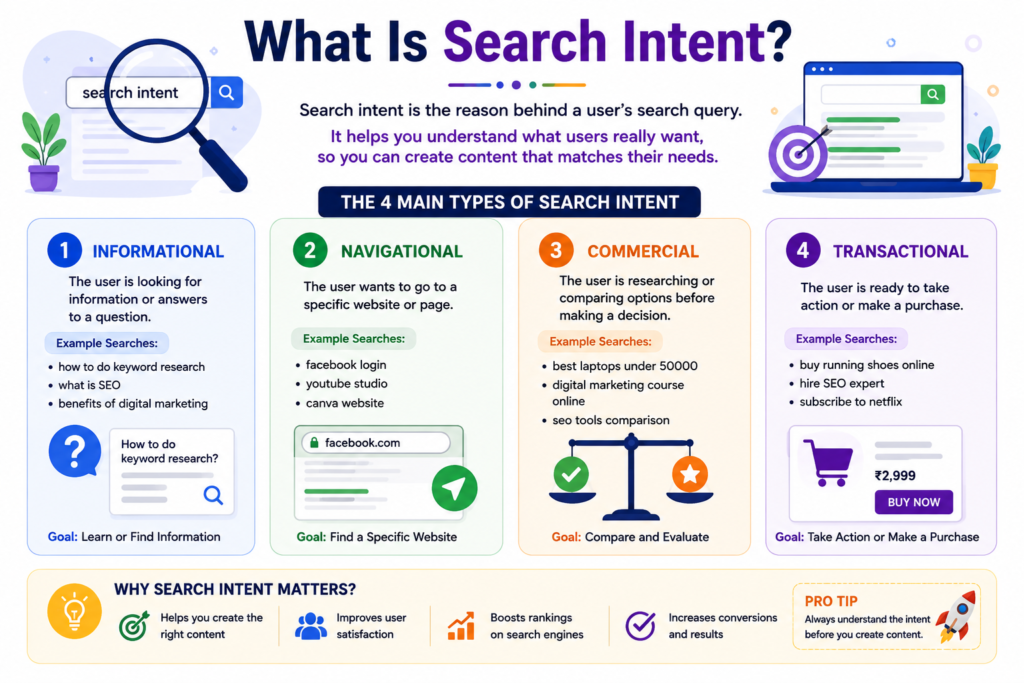
Search intent means the reason behind a user’s search.
For example, someone searching for **”what is SEO”** is probably looking for information.
Someone searching for **”SEO agency near me”** may be looking for a service provider.
**Understanding search intent allows you to create relevant content that directlymeets the needs and expectations of your audience.**
The main types of search intent include:
* Informational
* Navigational* Commercial
* Transactional
Creating content that satisfies search intent can improve the usefulness of your website.
SEO-Friendly Content
Content is an important part of SEO. Search engines aim to provide users with helpful and relevant information.
Good SEO content should:
* Answer the user’s question
* Be easy to read
* Provide useful information
* Use relevant keywords naturally
* Include clear headings
* Be original and valuable
* Be regularly updated when necessary
Avoid creating content only to insert keywords. Your main goal should be to help the reader.
SEO and Mobile-Friendly Websites
Many people access websites using smartphones. Therefore, having a mobile-friendly website is important for both users and search visibility.
Your website should:
* Work properly on mobile devices
* Have readable text
* Load quickly
* Use easy navigation
* Have buttons that are easy to click
A good mobile experience can help visitors stay longer and interact with your website.
Common SEO Mistakes Beginners Should Avoid
SEO takes time, and beginners can easily make mistakes.
Some common SEO mistakes include:
* Keyword stuffing
* Copying content from other websites
* Ignoring mobile optimization
* Using poor-quality backlinks
* Creating content without understanding search intent
* Ignoring page speed
* Not optimizing page titles and meta descriptions
* Expecting instant results
Avoiding these mistakes can help create a stronger SEO foundation.
How Long Does SEO Take?
One common question beginners ask is, **”How long does SEO take?”**
There is no fixed answer. SEO results depend on factors such as website quality, competition, industry, content, backlinks, technical performance, and the effectiveness of the SEO strategy.
SEO is generally a long-term process. You may need to consistently create useful content, optimize your website, monitor performance, and make improvements.
The goal should not be only to achieve a quick ranking but to build sustainable organic visibility.
How to Start SEO as a Beginner
If you are new to SEO, start with the basics.
Step 1: Understand Your Audience
Identify who you want to reach and what they are searching for.
Step 2: Do Keyword Research
Find relevant keywords related to your products, services, or content.
Step 3: Optimize Your Website
Improve titles, headings, URLs, content, images, and internal links.
Step 4: Create Useful Content
Publish helpful blogs and resources that answer your audience’s questions.
Step 5: Improve Technical SEO
Make sure your website is fast, secure, mobile-friendly, and easy for search engines to crawl.
Step 6: Build Website Authority
Focus on earning relevant and trustworthy backlinks and building your brand online.
Step 7: Monitor Your Results
Use SEO and analytics tools to track traffic, rankings, clicks, and conversions.
If you want any digital marketing service for your business Contact Me
Conclusion
Once you understand what is SEO, it becomes easier to plan your content, optimize your website, and improve your search visibility. What is SEO, or Search Engine Optimization, is an essential part of digital marketing that helps websites improve their visibility in organic search results. It includes **on-page SEO, off-page SEO, technical SEO, and local SEO**.
,What is SEO may seem complicated at first, but learning the basics can make it much easier to understand. Start by researching your audience, choosing relevant keywords, creating useful content, improving your website, and monitoring your performance.
Remember that SEO is a long-term strategy. There are no guaranteed instant results, but consistent effort and quality optimization can help your website attract more relevant visitors and support long-term online growth.A clear understanding of What Is SEO can make it easier to build an effective search optimization strategy.
If you are building a website or growing an online business, learning SEO is a valuable skill that can help you improve your digital presence and reach more potential customers.If you are still wondering What Is SEO, remember that it is a long-term strategy for improving your website’s visibility.